
Introduction to Reconditioning Engine Blocks
The engine block, often referred to as the cylinder block, is the backbone of an internal combustion engine. Engine blocks are typically made from cast iron or aluminum alloys, each offering its own balance of strength, weight, and thermal conductivity.
In this article, we will be discussing:
- Differences between closed deck and open deck engine blocks
- Advantages and disadvantages of each engine block design
- Applications suited for closed deck and open deck designs
- Engine block reconditioning and repair processes
- Alusil and Lokasil hypereutectic aluminum engine blocks
- Cylinder platings and coatings including Nikasil, PTWA, and APS
- Techniques for cast iron and aluminum block reconditioning
- Importance of cylinder bore surface finish
- Overview of engine block sleeving, including wet and dry sleeving
- Significance of proper honing for engine efficiency and longevity

Closed Deck Engine Blocks
Definition and Structure: A closed deck engine block features a solid or nearly solid structure at the top of the cylinder bores. This design provides increased rigidity and support around the cylinder, making it less prone to distortion under high pressures. The “closed” aspect refers to the metal surface that encloses the top of the cylinder bore, leaving only small passages for coolant to flow around the cylinders.
Advantages:
- Increased Strength and Durability: The closed deck design offers superior strength, making it ideal for high-performance and turbocharged or supercharged engines that operate under high pressure and temperature.
- Reduced Cylinder Distortion: By providing more support to the cylinder walls, the closed deck design minimizes distortion, leading to better piston ring seal, reduced oil consumption, and longer engine life.
Disadvantages:
- Limited Cooling: The closed structure restricts coolant flow around the cylinder bores, potentially leading to higher operating temperatures and increased risk of overheating under extreme conditions.
- Weight and Cost: Closed deck blocks are generally heavier and more expensive to manufacture due to the increased material and more complex engineering required.

Open Deck Engine Blocks
Definition and Structure: An open deck engine block is characterized by the presence of large openings or spaces around the top of the cylinder bores, connecting directly to the coolant jacket. This design allows for more efficient cooling around the entire cylinder, but with less structural support at the top of the cylinder walls compared to closed deck designs.
Advantages:
- Enhanced Cooling: The open deck configuration allows for better coolant flow around the cylinders, significantly improving heat dissipation and reducing the likelihood of engine overheating, especially in high performance applications.
- Lighter Weight: Open deck blocks can be lighter than their closed counterparts, contributing to overall vehicle weight reduction and improved fuel efficiency.
Disadvantages:
- Lower Structural Integrity: The lack of support around the cylinder bores can lead to greater cylinder wall flex under high cylinder pressure, potentially affecting the engine’s durability and performance over time.
- Susceptibility to Distortion: High-performance applications with forced induction may lead to cylinder distortion, affecting piston ring seal and increasing oil consumption and emissions.
Applications and Selection
Closed Deck Blocks are preferred in high-performance, racing, and heavy-duty applications where engine integrity and durability under high stress are paramount.
Open Deck Blocks, on the other hand, are more common, where efficiency and cost are more critical than extreme performance. Their superior cooling capabilities make them suitable for both daily driving conditions and performance applications.
Choosing Between an Open or Closed Deck
Choosing between an open, semi-closed, or closed-deck engine block depends on the specific requirements of the vehicle and its intended use. While closed deck designs offer unmatched durability and performance potential for high-stress applications, open deck blocks excel in cooling efficiency and are more cost-effective. Understanding these differences helps in making informed decisions regarding engine design, performance tuning, and vehicle customization, ensuring optimal performance and longevity of the engine.

In some cases, it may be advantageous to convert an open deck engine block to closed deck, but this is usually reserved for extreme applications with forced induction or power adders like nitrous will be used.
Engine Block Reconditioning and Repairs
Engine block reconditioning and repairs are critical processes in the automotive industry, aimed at restoring engines to their optimal performance and extending their service life. These procedures encompass a range of techniques and practices designed to address wear, damage, or defects within the engine block, which can arise from regular use, overheating, or mechanical failure. From simple machining tasks like honing cylinder bores and resurfacing the block deck, to more complex repairs such as welding cracked sections or correcting geometric distortions, reconditioning breathes new life into engine blocks, ensuring they meet or exceed original manufacturing specifications. This section delves into the various aspects of engine block reconditioning and repairs for the most common types of engines, outlining best practices, tools, and techniques employed by professionals to achieve precision, durability, and reliability in refurbished engines.
Cast Iron
Reconditioning of cast iron blocks is relatively straightforward. Cast iron, ductile iron, or CGI (compacted graphite iron) blocks can easily be bored, honed, and fitted with oversized pistons during refurbishment.
Aluminum
Most manufacturers have switched away from cast iron engine blocks, as aluminum engines provide many benefits including weight reduction, improved cooling, and allow for increased output. Although many aluminum engine blocks are fitted with cast iron, ductile, or steel sleeves, many OEMs are switching to hypereutectic liner-less aluminum engine block which allow manufacturers to reduce engine footprint while increasing displacement and output without sacrificing cooling or efficiency.

For additional wear resistance and improved performance, cylinder wall platings like Nikasil or coatings like PTWA or APS, like SUMEbore, can be applied to the cylinder walls.
Aluminum engine blocks with cast iron, ductile, or steel sleeves can have the sleeves replaced or be bored out to fit oversized pistons.
Liner-less aluminum engine blocks with cylinder bore coatings or platings require special processes for reconditioning.

Nikasil
Porsche is well known for its use of Nikasil cylinder plating, comprised of nickel, silicon, and carbide, which provides a very hard, durable, and low friction wear surface for the cylinder walls. Nikasil is used primarily in powersports, motorsports, and performance applications.
If the cylinder bores are in-spec for ovality and taper and have no physical damage, it is often possible to deglaze the cylinder bores to prepare the engine for re-ringing or sometimes even light hone the cylinders. However if too much material is removed, this can result in excessive piston to cylinder wall clearance. If the cylinder bores are out of specification, they have to be stripped and re-plated.

Nikasil also has very specific surface finish requirements and requires diamond honing due to the hardness of the Nikasil plating, which typically comes in around 500 vickers (+/- 100 vickers). Mahle reports that a standard Nikasil cylinder features a surface roughness average of 0.4 micrometers (15.7 microinches), with a 96% bearing surface, and valleys averaging 1.2 micrometers (47.24 microinches) in depth, however in practice, surface finishes can vary greatly between suppliers depending on how they are finished.
SUMEbore
Oerlikon’s SUMEbore APS (Atmospheric Plasma Spray) coating technology represents a significant advancement in the field of engine performance and longevity. SUMEbore APS is applied to the inner surfaces of cylinder bores resulting in a thickness of .004-.005" after honing, similar to Nikasil. Once the SUMEbore coating has been applied via the Atmospheric Plasma Spray (APS) process, the coating requires precise honing to achieve the optimal “mirror” surface finish. The required oil tribofilm to support proper piston and ring function is created by micro-porosity of the SUMEbore cylinder surface as shown below:

The APS SUMEbore coating itself is a composite material that includes ceramics for wear resistance and heat management, along with metals for enhanced durability. This unique combination not only significantly reduces friction between the piston rings and cylinder walls, leading to improved engine efficiency and fuel economy but also enhances the wear resistance of the cylinder surfaces, extending the engine’s operational life. Furthermore, the thermal properties of the SUMEbore APS coating help to better manage engine heat, contributing to overall engine performance and reliability.
PTWA - Plasma Transferred Wire Arc
PTWA (Plasma Transferred Wire Arc) is a thermal spray technology used to create a durable, wear-resistant cylinder running surface directly on engine bores. PTWA was developed and patented by Ford and has been in wide use significantly longer and across more applications than SUMEbore. It is widely used in modern linerless aluminum engine designs and in advanced engine remanufacturing where conventional liners or plating are not practical. Rather than inserting a liner or chemically plating the bore, PTWA applies a thin, iron-based coating directly to the prepared cylinder surface and finishes it by precision honing. Where APS SUMEbore coatings start with a powder, PTWA uses a wire, however the process to coat the cylinder bores and the final product remains for the most part unchanged. As the particles impact the bore wall, they rapidly solidify and build up a thin, dense coating. After spraying, the bore is honed to final size and surface finish, creating a functional running surface for piston rings. Like with SUMEbore, PTWA coating porosity greatly improves the wear and frictional characteristics of the cylinder and piston system over that of a conventional iron bore, matching or exceeding the performance of Nikasil cylinder surfaces.
Due to both cost and environmental considerations, many manufacturers are replacing Nikasil with APS or PTWA cylinder wall coatings in performance applications. However, since these coatings are very thin, like Nikasil, blocks cannot be bored and honed. Although it is technically possible to have the APS or PTWA coatings re-applied, due to lack of support in the aftermarket for these new cylinder technologies, engines with APS or PTWA cylinder coatings have to be sleeved or reconditioned with Nikasil plating.
Fitting steel sleeves to one of these all-aluminum engine blocks is not recommended. Although fast and cheap, fitting steel sleeves reduces cooling and performance and compromises the structural integrity of the engine, as the block was never designed to be sleeved.
If you have a liner-less aluminum engine block with one of these thin-wall coatings, the best option is to re-do the coating or plating rather than fitting sleeves to the block. If there is deep scoring, the block has to be bored, plated or coated, and honed to the next available oversize or have dry aluminum sleeves fitted which can then be plated or coated, then again honed to size. Custom pistons and head gaskets will also likely be required, so it is important that you discuss aluminum engine block repair with someone proficient in this process to ensure satisfactory results.

Alusil
Reconditioning Alusil cylinder bores is a specialized process that requires careful attention to detail to preserve the unique characteristics of the Alusil material while restoring the cylinder walls to optimal condition. Alusil, an aluminum alloy with a high silicon content, is used in engine blocks to provide excellent wear resistance without the need for traditional steel liners, cylinder platings, or coatings. The reconditioning process for these cylinders involves several key steps, each designed to ensure the integrity and performance of the engine block.

As you can see in the photo above, there is no visible crosshatch — what you see are the exposed silicon particles. When reconditioning Alusil cylinder bores, it’s crucial to understand the material’s unique properties and the importance of maintaining the silicon-rich surface layer, as this is what supports the oil tribofilm required for proper piston and ring function. Specialized tools and techniques are required to avoid damaging this layer, which is critical for the cylinder’s wear resistance and longevity. After the honing and lapping process, flattened silicon particles are exposed, leaving these particles intact. Given the specialized nature of this process, it is often best performed by experienced machinists familiar with Alusil and its requirements. Replacement pistons must also have the required coatings to run in an Alusil cylinder bore, which can be supplied by Mahle Motorsport.
However, most engine builders choose to install cylinder sleeves, liners, or direct Nikasil plate Alusil engine blocks due to the complexity of properly reconditioning Alusil and unpredictable results delivered by this process.
Lokasil
Where most people have heard of Alusil, unless you are familiar with Porsche engines, you likely will not know of Lokasil. For lack of a better description, Lokasil is localized Alusil. Where an Alusil aluminum engine block is cast from this allow through and through, with a Lokasil engine block, the hypereutectic high-silicon content aluminum is localized just around the cylinder bores. The rest of the block can then be cast out of regular aluminum. Porsche utilized the Lokasil process for Boxster, Cayman, and 911 models from 1997 through 2008 for the M96 and M97 engine.
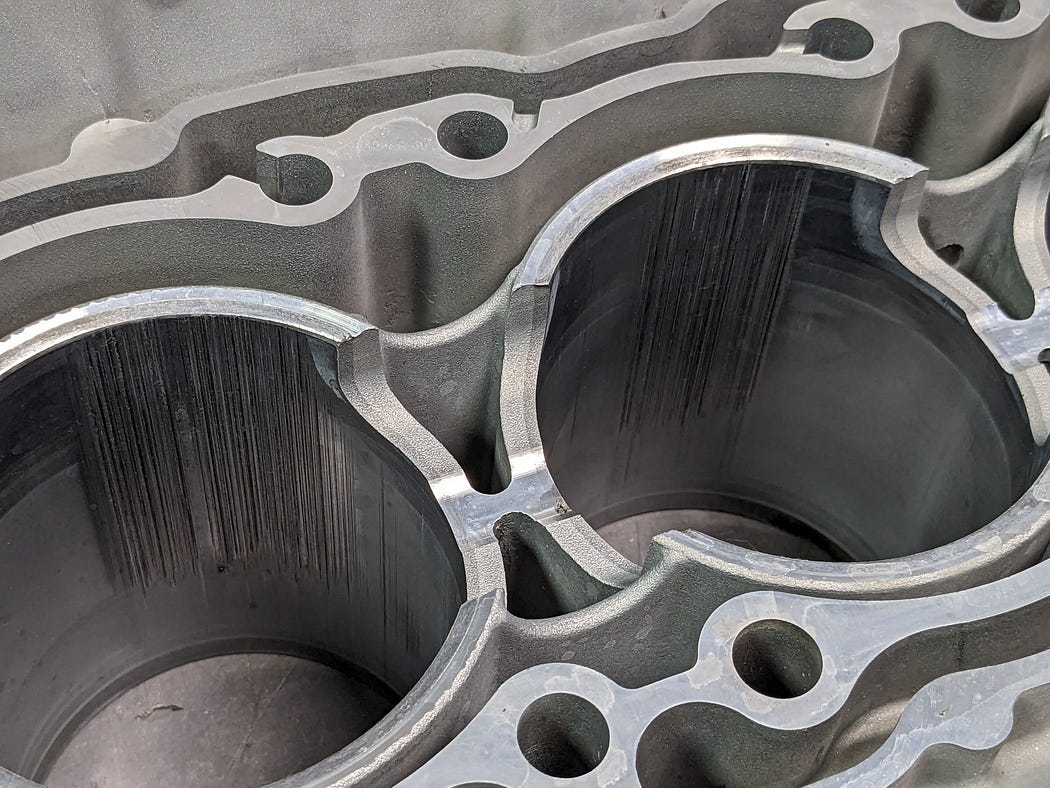
Unfortunately, these engine blocks are prone to failures including cracking and bore scoring. Unlike with an Alusil engine block, direct Nikasil plating is not recommended due to the fact that the cast in liners can crack, so these blocks should be sleeved. Another quirk with the Porsche M96 and M97 Lokasil engine block is that they do not respond well to having cast iron, ductile, or steel sleeves, so aluminum sleeves must be fitted. LN Engineering and Flat 6 Innovations pioneered repairing and upgrading Porsche Lokasil engine blocks, with thousands of engines fitted with Nickies billet aluminum NSC-plated cylinder liner sleeves since 2002.
If you want to learn more about hypereutectic engine block technology, Charles Navarro’s white paper on Al-Si Cylinder Systems is a must read.
Engine Block Sleeving: Wet vs. Dry Sleeving Explained
In the realm of automotive engine modifications and repairs, engine block sleeving stands out as a crucial technique for enhancing performance, durability, and engine life. This process involves inserting a sleeve or liner into the cylinder bore of an engine block, which can be essential for engine rebuilds, increasing displacement, or repairing damaged cylinders. Two primary methods of sleeving are utilized: wet sleeving and dry sleeving. Each method offers distinct advantages and is suited to different types of engines and applications. This article delves into the differences between wet and dry sleeving, providing insights into their applications, benefits, and considerations.
What is Engine Block Sleeving?
Engine block sleeving is a process of inserting a new cylinder liner into the engine block to replace the existing bore or to reinforce it. This is often done when the original cylinder walls are damaged, cracked, worn out, or if the engine is being modified for higher performance. Sleeves are typically made from durable materials like cast iron, ductile, or steel, providing a new wearing surface for the pistons and piston rings, restoring proper operation to worn engines. Aluminum sleeves with Nikasil plated bores can be found performance applications where improved cooling as well as thermal and volumetric efficiency are most important.
Wet Sleeving
Wet sleeving is characterized by the sleeve’s direct contact with the engine’s coolant. In this setup, the sleeves are designed with an outer surface that comes into direct contact with the coolant in the engine’s water jacket. This direct contact allows for superior cooling of the cylinders, making wet sleeving an ideal choice for high-performance applications where engines are subject to extreme temperatures and stresses.
Advantages of Wet Sleeving:
- Enhanced Cooling: The direct contact with coolant offers improved heat dissipation, reducing the risk of overheating in high-performance or heavy-duty applications.
- Improved Strength: Often the replacement sleeve will be constructed out of an alloy that is stronger than the material it is replacing, allowing for larger cylinder bore sizes or increased durability and longevity.
- Versatility: Wet sleeves can be replaced if they become damaged, making them a practical option for engines that undergo significant stress or for experimental setups where modifications are frequent.
- Positive Retention: A flanged wet sleeve, when installed in an engine block, is typically sandwiched between the cylinder head and the bottom of the water jacket, preventing the sleeve from dropping or slipping.
Considerations:
- Complex Installation: The process requires precise machining and installation to ensure a watertight seal between the sleeve and the engine block. This complexity can increase the cost and time required for the sleeving process.
- Potential for Leakage: If not installed correctly, wet sleeves can lead to coolant leaks, which may cause engine damage or require additional repairs.
Dry Sleeving
Dry sleeving, in contrast, does not involve direct contact between the sleeve and the engine’s coolant. Instead, dry sleeves are inserted into the existing bore of the engine block, fitting snugly without extending into the coolant passages. This method is often used for engines that do not require the enhanced cooling provided by wet sleeves, for repairing damaged cylinders in a more cost-effective manner, or where wet sleeves cannot be used.
Advantages of Dry Sleeving:
- Simplicity and Cost: Dry sleeving is generally less complex and costly than wet sleeving, making it accessible for a wide range of applications, from daily drivers to vintage car restorations.
- Flexibility in Application: This method can be applied to almost any engine block, providing a straightforward solution for repairing or reinforcing cylinder bores.
Considerations:
- Limited Cooling: Since dry sleeves do not have direct contact with the coolant, they may not offer the same level of cooling as wet sleeves, potentially limiting their use in high-performance applications.
- Durability: While dry sleeves can significantly extend the life of an engine, they might not always provide the same level of durability and heat dissipation as wet sleeves, particularly in demanding conditions. If the engine block in question is known to have casting issues, fitting a dry sleeve may lead to a casting failure. Lastly, unless a flanged dry sleeve with a lip at the top is installed or the liner is somehow positively retained, it is possible for the sleeve to drop or slip in operation.
Choosing Between Wet and Dry Sleeving
The choice between wet and dry sleeving depends on several factors, including the specific requirements of the engine, the intended use of the vehicle, and budget considerations. Wet sleeving is often preferred for high-performance engines that require maximum cooling and durability. In contrast, dry sleeving offers a more cost-effective and simpler solution for engine repairs or moderate performance enhancements.
Regardless of the choice, both methods of engine block sleeving provide valuable solutions for extending engine life, enhancing performance, and ensuring the reliability of both modern and vintage vehicles. When considering sleeving, consulting with an experienced machinist or engine specialist is crucial to determine the best approach for your engine’s needs.
Fitting and Finishing Sleeves in an Engine Block
The process of fitting and finishing sleeves, whether wet or dry, is critical for ensuring engine performance, reliability, and longevity. This procedure involves several steps, from preparing the engine block to the final finishing of the sleeve’s surface. Understanding these steps can provide insight into the complexity and precision required in engine sleeving.
Preparation of the Engine Block
Before any sleeving can begin, the engine block must be thoroughly cleaned and inspected for cracks, damage, or wear that could affect the integrity of the sleeving process. This often involves:
- Cleaning: Removing all debris, oil, and coolant from the engine block to ensure a clean working surface.
- Inspection: Using techniques such as magnetic particle inspection, x-ray, ultrasonic, eddy current, or dye penetrant inspection to identify any cracks or defects.
- Measurement: Assessing the dimensions of the existing cylinders to determine the correct size of the sleeves needed.

Installation of Sleeves
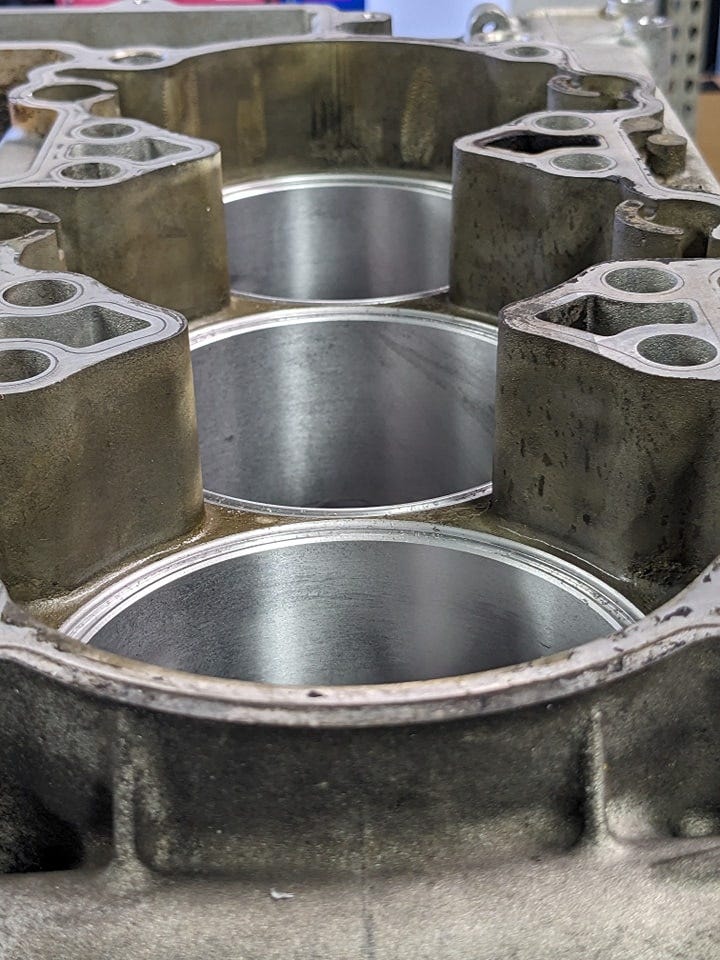
The installation process differs between wet and dry sleeves, reflecting their unique designs and cooling arrangements. The dissimilar expansion rate of cast iron, ductile, or steel sleeves compared to that of an aluminum engine block must be taken into consideration. It is also important to know where and how much material can be removed out of an engine block before machining it as to not compromised the structural integrity of the engine block casting. It is important to have an intimate knowledge of the engine block you are going to be sleeving before proceeding .One way to determine this is to sacrifice a junk block and section it, as we have shown above.
Wet Sleeving Installation:
- Machining: The engine block’s cylinder bores are machined to a specific size that allows the wet sleeve to fit snugly while ensuring a proper seal against coolant leaks.
- Sealing: Special seals or O-rings are fitted to the bottom of the sleeve or the engine block to prevent coolant from leaking into the oil pan.
- Insertion: The sleeve is carefully inserted into the bore, ensuring the seal is correctly positioned and the sleeve is seated properly.
Dry Sleeving Installation:

- Machining: Similar to wet sleeving, but the bore is machined to a tighter tolerance since dry sleeves must fit precisely within the existing cylinder bore without extending into the coolant jacket.
- Insertion: The dry sleeve is pressed into the bore, often requiring less force than wet sleeving due to the tighter machining tolerances.
When using either dry and wet cylinder sleeves or liners, typically they are installed with an interference fit, meaning the sleeve has a larger outside diameter than what the engine block is bored to. This often requires the engine block to be heated and the cylinder sleeve or liner to be cooled, so when they are married and the temperatures equalize, the sleeve is positively retained in the engine block and does not move or leak during operation. A press is required to ensure the sleeves are installed properly.
Iron cylinder sleeves are installed using an interference or press fit, where the block or cylinder bore’s size is slightly smaller than the sleeve’s outer diameter. This difference allows the sleeve to be pressed into the cylinder, securing it in place due to the size difference. For cast iron blocks, the interference fit is typically .0025 inches, while for aluminum blocks, it is .004 inches, ensuring a tight fit. The amount of required interference fit will vary between applications and also depending on the type of cyinder liner being fitted.
Some engines use cylinder sleeves or liners that are bonded to the engine block with an adhesive or a specialized bonding process, rather than being press-fitted or mechanically retained. This method is less common than traditional press-fitting but is utilized for specific engineering reasons, such as when dealing with aluminum engine blocks where a harder, more wear-resistant material is needed for the cylinder surfaces, or in high-performance or specialized applications where the bonding can provide additional strength or heat management benefits.
LN Engineering Nickies sleeving process uses bonded aluminum liners with nickel silicon carbide plated cylinder bores.
LN Engineering is an example of a company that uses this specialized bonding process for the installation of both wet and dry aluminum Nikasil plated cylinder sleeves in open and closed deck aluminum engine blocks where cast iron, ductile, or steel liners. The main reasons for using a bonding process are due to cracking of engine blocks caused by the required interference when fitting cast iron, ductile, or steel liner sleeves and dissimilar expansion rates resulting in oil and coolant intermix and blown cylinder head gaskets.
The adhesive or bonding material used must withstand high temperatures and pressures, and maintain its integrity over the engine’s operational life. This process allows for the repair of damaged engine blocks by replacing just the sleeve, or for the manufacture of engines with lighter materials that still maintain high durability and performance characteristics.
The specific technique and materials used for bonding cylinder sleeves to engine blocks can vary between manufacturers and may involve proprietary technologies like those developed by LN Engineering. It’s also a practice seen in both automotive and industrial engine applications.
Finishing the Sleeves
After installation, both wet and dry sleeves undergo a finishing process to ensure they provide the optimal surface for the piston rings and ensure the cylinder can handle the desired power output.
- Honing: The inside of the sleeve is honed to achieve the correct surface finish and tolerance. Honing also helps to ensure the piston rings can form a good seal, reducing oil consumption and maximizing compression.
- Decking: The top of the engine block and sleeves may be machined (decked) to ensure a flat surface for the cylinder head gasket, crucial for a good seal and engine integrity. Modern engines utilize MLS head gaskets that have very specific surface finish requirements, so it is important to check with the manufacturer what those requirements are. Most MLS cylinder head gaskets require a surface roughness average of 30 micro-inches or less, however some will tolerate slightly rougher surfaces of 40–60 micro-inches. A thicker cylinder head gasket may be required after resurfacing to accommodate for material removed during this process.
- Final Inspection: A thorough inspection is performed to ensure all dimensions are within specifications, and there are no leaks.
The Honing Process: Achieving a Proper Plateau Finish
Honing is a critical machining process used in the finishing of engine cylinder bores, including those that have been sleeved. It involves using abrasive stones to remove material from the cylinder walls, creating the ideal surface finish for piston ring sealing and lubrication. The process not only improves the surface finish but also corrects any slight imperfections in the bore geometry.
The honing process can be broken down into several key components: the use of roughing and finishing stones, the incorporation of diamond stones, and the achievement of a proper plateau finish on cast iron, ductile, steel, and Nikasil cylinders. Even with a plateau finish, the actual target values for Ra, Rpk, Rvk, and Rk will differ based on the cylinder type as well as what piston rings are going to be used. For reference, CP-Carrillo provides some basic guidelines for honing engine blocks with cast iron, ductile, or steel sleeves on the CP-Carrillo Installation Specification Sheet which contains their piston ring installation recommendations.
Plateau honing a cylinder bore offers several significant benefits that are crucial for the performance, longevity, and efficiency of an engine. This honing technique is designed to create an ideal surface texture on the cylinder walls by removing the peaks formed during the initial rough honing stages while retaining a network of micro-valleys. This results in a surface that provides the best of both worlds: smooth enough to reduce friction and wear on the piston rings and cylinder walls, yet capable of retaining enough oil for effective lubrication.
Roughing and Finishing Stones
The honing process typically begins with roughing stones and is completed with finishing stones. These stones have different abrasive grit sizes designed for specific purposes:
- Roughing Stones: These are used at the beginning of the honing process. They have a coarser grit and are employed to quickly remove material from the cylinder walls, correcting any ovality, taper, or surface imperfections. Roughing stones prepare the bore for the finer work that follows by creating a uniform surface.
- Finishing Stones: After the bore has been roughened and the majority of the material has been removed, finishing stones with a finer grit are used. These stones refine the surface created by the roughing stones, smoothing it to reduce friction between the piston rings and cylinder walls. The goal is to achieve a surface that is not only smooth but also capable of retaining oil to lubricate the piston rings.
Diamond Stones
Diamond honing stones are a more recent advancement in honing technology. Made with small diamonds bonded to the surface of the stone, they are used for their exceptional hardness and durability. Diamond stones can provide a very consistent and precise surface finish and are particularly effective for hard materials, such as those found in some high-performance or coated cylinder liners. They are often used in a multi-stage honing process, where different grit sizes gradually refine the bore surface.
Achieving a Proper Plateau Finish
A plateau finish is the ultimate goal of the honing process. This finish is characterized by a smooth surface with numerous microscopically small valleys and peaks. The peaks provide support for the piston rings, while the valleys serve to retain oil, enhancing lubrication and reducing wear.
To achieve a plateau finish, a two-step or multi-step honing process is employed:
- Initial Honing: This step uses roughing and/or intermediate grit stones to create the desired bore geometry and surface roughness.
- Final Honing: This step involves using very fine grit finishing stones or brushes to lightly remove the peaks created during the initial honing, leaving behind the valleys. This reduces the surface roughness while maintaining its ability to hold oil.
Some honing processes may also incorporate a brushing step, using specialized brushes instead of stones for the final surface finish. This can further improve the plateau finish by ensuring a consistent and controlled surface texture.
Importance of Proper Honing
The importance of achieving a proper plateau finish cannot be overstated. This finish ensures the best possible seal between the piston rings and the cylinder walls, reducing oil consumption and emissions while improving engine performance and longevity. A well-executed honing process, tailored to the specific requirements of the engine and the type of sleeves used, is essential for optimal engine operation.
The honing process, including the use of roughing and finishing stones, the integration of diamond stones, and the achievement of a plateau finish, is a nuanced and critical aspect of engine machining. Proper execution ensures the longevity and efficiency of the engine, highlighting the importance of precision in automotive engineering.
Quality Control
Throughout the sleeving process, strict quality control is essential to ensure that the sleeves are installed correctly and that the engine will perform as expected. This includes:
- Dimensional checks to ensure the sleeves are correctly sized and positioned within the engine block.
- Leak testing for sleeved engines to verify the integrity of the coolant system. Modern cooling systems are pressurized and can run upwards of 20psi, however it is best practice to pressure test blocks at 40–60 psi to ensure they are leak free. Aluminum engine blocks fitted with cast iron, ductile, or steel sleeves may benefit from being pressure tested at normal operating temperatures due to dissimilar expansion rates between the block and sleeves/liners.
- Surface inspection to ensure the honed surface is ready for the piston rings. Both honing angle and surface finish are critical to proper piston ring operation. The surface finish of the cylinder bore affects the seating and sealing of piston rings, oil retention, and overall engine efficiency. Honing angle affects piston ring rotation, with Nikasil cylinders typically having a crosshatch angle of 10–15 degrees compared to the typical 45 degrees commonly used with cast iron, ductile, or steel cylinders.
The fitting and finishing of engine block sleeves are intricate processes that require specialized equipment and expertise. Whether for performance enhancement, engine restoration, or repair, the proper installation and finishing of sleeves are paramount for achieving desired engine performance and longevity.
Controlling Ovality and Taper
When honing engine blocks, achieving precise geometric specifications for the cylinder bores is crucial for the performance and longevity of the engine. Ovality and taper are two critical dimensions that need to be controlled during the honing process. These specifications vary depending on the engine’s design, its intended use, and the manufacturer’s tolerances. However, there are general guidelines and industry standards that provide a framework for acceptable limits.
Ovality
Ovality, also known as out-of-roundness, refers to the deviation from a perfect circular shape in the cross-section of the cylinder bore. It’s measured by comparing the largest and smallest diameters of the bore cross-section.
The acceptable level of ovality typically ranges from 0.0005 inches (0.0127 mm) to 0.002 inches (0.0508 mm) for most passenger vehicle engines. High-performance or racing engines might have stricter requirements due to the increased demands placed on the engine components. Ovality beyond the specified tolerance can lead to uneven wear, poor piston ring sealing, and ultimately reduced engine performance and efficiency.
Taper
Taper refers to the change in diameter of the cylinder bore from one end to the other. It’s a critical measurement that indicates whether the bore is perfectly cylindrical or if it narrows or widens towards one end.
Taper tolerances are often similar to those for ovality, with many engines allowing a maximum taper of 0.0005 inches to 0.002 inches (0.0127 mm to 0.0508 mm) along the length of the bore. The acceptable taper will depend on the engine design, with tighter tolerances for high-performance applications. Excessive taper can lead to issues such as improper piston movement, increased wear, and oil consumption.
Importance of Controlling Ovality and Taper
- Piston Ring Seal: Proper control of ovality and taper is essential for an effective piston ring seal, which is crucial for maintaining compression and minimizing oil consumption.
- Wear and Longevity: Minimizing these geometric deviations helps ensure even wear patterns on the piston rings and cylinder walls, thereby extending the life of these components.
- Performance: Accurate honing that controls ovality and taper contributes to the overall efficiency and performance of the engine by ensuring optimal fitment and movement of the pistons within the cylinders.
Honing Practices Affecting Ovality and Taper
Achieving the desired ovality and taper specifications requires precise honing practices, including:
- Selection of Honing Stones: Choosing the correct grit and hardness to achieve the desired surface finish and geometric accuracy.
- Honing Technique: Using the correct honing pattern, pressure, and speed to ensure even material removal across the entire bore.
- Measurement and Inspection: Regularly measuring the bore during the honing process using precise instruments, such as dial bore gauges or CMM (Coordinate Measuring Machines), to ensure compliance with specifications. It is equally important that measurement equipment is regulary calibrated to ensure measurements are accurate.
Manufacturers will provide specific tolerances for ovality and taper based on the engine’s design and performance requirements. It’s crucial for machinists and engine builders to adhere closely to these specifications and regularly check their work to ensure that the honing process produces cylinders that meet or exceed these standards.
Bare minimum, it is critical that cylinder bores are measured at the top, middle, and bottom at 12 and 6 o’clock and 3 and 9 o’clock positions. Measurements should be taken around 20°C (68°F).
Advanced Honing Techniques
Many say that honing isn't a science and that honing is an art. As such, there are some techniques we want to explain, but in that same breath, they are best suited to specific applications.
Hot Honing
Hot honing is a process where the engine block is heated to its normal operating temperature during the honing process. This technique acknowledges that metal expands when heated, which means an engine operating under normal or high stress will see its components expand and shift slightly. By honing the cylinder bores at operating temperature, the process intends to achieve a bore size and geometry that more accurately reflect the engine’s true running conditions.
Using Torque Plates
The use of torque plates simulates the stress and distortion an engine block undergoes when the cylinder head is bolted down. A torque plate is a machined piece of metal, typically steel or aluminum, that is bolted to the engine block in place of the cylinder head during the honing process. This plate applies pressure to the block, mimicking the clamping force of the cylinder head, theoretically distorting the block in a way similar to how it would be distorted in actual engine operation, however, like with hot honing, there are lots of variables to consider, so torque plates are not always used or recommended.
Implementing Advanced Honing Techniques
Implementing these advanced honing techniques requires specialized equipment and a deep understanding of engine mechanics and thermodynamics. Hot honing setups may involve controlled heating elements or environments to maintain consistent temperatures, while torque plate honing necessitates accurate torque specs and custom plates designed for the specific engine being machined. Blocks that are hot-honed with torque plates will not measure round at room temperature or when the torque plate is removed, so these measurements must be taken in-situ as it is being honed. Both techniques are indicative of the high level of detail and precision required in modern engine reconditioning and repair, aiming to achieve the closest possible match to real-world operating conditions.
It is worth noting that for some applications, using torque plates or hot honing is not practical and in some cases, does not achieve any notable improvement over conventional honing practices. One such example of this is an aircooled Porsche aluminum Nikasil cylinder, where the best practice is to hone the cylinder so that it is as round as possible with little to no taper when measured in free air at room temperature.

Understanding Cylinder Bore Surface Finish
The surface finish of a cylinder bore is determined by several factors, including the material of the block (iron or aluminum), if the cylinder bores are coated or plated, the type of rings (cast, chrome, moly, etc.), and the application of the engine (racing, street performance, daily driving). The finish is usually measured in microinches (µin) or micrometers (µm) and involves two main aspects:
- Roughness: The small, finely spaced peaks and valleys on the surface.
- Texture: The pattern created by the honing process, which helps in oil retention and distribution.

Tools for Measuring Surface Finish
To accurately measure the surface finish of cylinder bores, you’ll need a profilometer. The most common one used is the Mitutoyo SJ-210, which can be purchased from Total Seal, along with their SJ-210 upgrade package featuring Digital Metrology Traceboss and Hatchview to provide additional tools for evaluating cylinder bore surface finish. Mitutoyo has since released an updated version, the SJ-220, which functions exactly the same way but features a touchscreen, USB-C connectivity, and a rechargeable battery. Both these units are skidded profilometers, however more expensive skidless systems like the Zeiss Touch 50 are more accurate and can even measure waviness, something a skidded profilometer cannot measure.
These advanced tools can provide detailed analysis, including peak-to-valley height (Rz), mean roughness depth (Rz), root mean square roughness (Rq or RMS), skewness (Rsk), Kurtosis (Rku), Bearing Area Curve (BAC or Abbott-Firestone Curve), Material Ratio (Mr), and more.
However, the surface finish parameters for Reduced Peak Height (Rpk), Reduced Valley Depth (Rvk), and Core Roughness Depth (Rk) are the critical components of the modern surface finish measurement system we’ll be focusing on, especially when evaluating the functionality of surfaces like cylinder bores in internal combustion engines. These parameters are part of the Motif parameters (also known as the Abbott-Firestone curve parameters) and provide a deeper insight into the micro-geometry of the surface, which is crucial for understanding how surfaces interact with lubricants and wear over time.
Rpk represents the average height of the surface’s asperities (peaks) that protrude above the core roughness. These peaks are the first to make contact under load and are subject to wear during the initial operation of the engine. Rpk provides insight into the initial wear-in or run-in period of the engine. A high Rpk value indicates a greater amount of material that may be removed quickly during initial use, potentially leading to rapid wear if excessive. Conversely, a low Rpk value suggests a smoother initial surface, which may require less run-in time and potentially reduce initial wear rates.
Rvk measures the depth of the surface valleys below the core roughness. These valleys are critical for lubricant retention, serving as reservoirs for oil that provide lubrication over the lifespan of the engine. Rvk is crucial for understanding the lubrication capacity of the surface. A higher Rvk value suggests better oil retention capability, which can enhance lubrication, reduce friction, and wear between the piston rings and cylinder walls. It ensures that enough oil is present to maintain a lubricating film, even under high loads or temperatures.
Rk represents the core roughness of the surface, excluding the peaks and valleys accounted for by Rpk and Rvk. It reflects the average roughness of the material’s surface where the majority of contact occurs once the initial peaks have worn down. Rk provides a measure of the long-term wear surface. After the initial run-in period, Rk will predominantly influence the engine’s performance, affecting friction, wear, and sealing efficiency. A properly optimized Rk value ensures that the engine operates efficiently, with minimal friction and wear, over its service life.
Integration of Rpk, Rvk, and Rk
Understanding the relationship and balance between Rpk, Rvk, and Rk is essential for optimizing engine performance and durability. Ideally, a surface finish will have:
- Low Rpk to minimize initial wear and rapidly establish a stable wear pattern.
- High Rvk to ensure sufficient oil retention for ongoing lubrication and cooling.
- Optimized Rk to provide a durable wear surface that maintains efficient operation over time.
By carefully balancing these parameters, engineers and machinists can create engine surfaces that offer an ideal combination of initial run-in characteristics, long-term durability, and efficient lubrication. These parameters allow for a more nuanced approach to surface finishing, beyond what traditional roughness measurements (such as Ra) can offer, leading to improved engine performance and longevity.
Steps to Check Cylinder Bore Surface Finish
- Clean the Cylinder Bore: Ensure the bore is clean and free from oil, coolant, and debris. Any contamination left over from honing can affect the accuracy of your measurements. Any folded over or torn material must be removed using plateau brushes or similar mechanical methods. Initial cleaning can be done in a jet wash or ultrasonic cleaner, however this is not enough. The cylinder bores will need to be scrubbed with ATF or Marvel Mystery Oil — these products work well to release contamination. Final cleaning can be done with Kimwipes lint-free wipes and denatured alcohol or Berryman’s Carb Cleaner. This may seem excessive, but if the bores are not cleaned thoroughly, the surface finish measurements will be inaccurate.
- Calibrate the Profilometer: Before taking measurements, calibrate the profilometer according to the manufacturer’s instructions to ensure accuracy. It is also important to inspect the profilometer stylus tip with a microscope to ensure it is not damaged.
- Take Measurements: Position the tool’s probe perpendicular to the honing marks. It’s recommended to take measurements at multiple points around the bore and at different depths to account for variations in the honing process. The QMP Racing profilometer stylus holder for the SJ-210 is highly recommended.
- Analyze the Data: Compare the measurements to the specifications recommended by the engine manufacturer or the piston ring supplier. These specifications usually include the ideal Ra value for your specific application, however it is important not to rely on the Ra alone as it is a calculated value — the Rpk, Rvk, and Rk will provide a more accurate representation of actual cylinder bore surface finish.
- Repeat if Necessary: If the surface finish does not meet the specifications, additional honing may be required. Adjust the honing process as needed (changing honing stones, pressure, or pattern) and recheck the finish.
Interpreting the Results
- Within Specifications: If the surface finish is within the recommended specifications, the cylinder bore is ready for further engine assembly.
- Too Rough: A surface that’s too rough can lead to excessive wear on the piston rings and cylinders, potentially causing oil consumption and blow-by issues.
- Too Smooth: A surface that’s too smooth might not retain enough oil, leading to insufficient lubrication, increased friction, and premature wear.
Checking for proper cylinder bore surface finish after honing is a crucial step in engine rebuilding or assembly. It ensures that the engine will operate efficiently, with optimal compression and minimal wear. By following the steps outlined above and adhering to the specifications provided by the engine or piston ring manufacturer, you can achieve the desired performance and durability from your engine.
Conclusion
In conclusion, the exploration of engine blocks throughout the article illuminates the technical nuances and critical considerations in their design, reconditioning, and repair processes. It outlines the meticulous steps involved in ensuring engine blocks meet the highest standards of functionality and durability. This knowledge equips readers with a deeper understanding of engine block technology, highlighting its pivotal role in the overall performance and longevity of automotive engines.
About LN Engineering
LN Engineering, a recognized leader in the field of precision automotive engineering, specializes in the manufacture of high-quality billet aluminum “Nickies” Nikasil plated cylinders, along with the expert reconditioning of Alusil, Lokasil, and Nikasil plated aluminum engine blocks. Their commitment to innovation and quality has positioned them at the forefront of engine technology, particularly for Porsche and other high-performance vehicles. By utilizing advanced materials like billet aluminum and proprietary plating processes, LN Engineering enhances the durability, performance, and longevity of engine components.
Their Nikasil plated cylinders are renowned for their exceptional wear resistance, reduced friction, and improved heat dissipation characteristics, making them a preferred choice for performance and racing applications. LN Engineering’s expertise extends to the reconditioning of engine blocks made from Alusil, Lokasil, and Nikasil — materials known for their lightweight properties and thermal efficiency but requiring specialized knowledge to properly maintain and repair. Through meticulous machining and plating techniques, LN Engineering restores these engines to meet or exceed original specifications, ensuring optimal performance and reliability.
Whether it’s manufacturing state-of-the-art cylinders or reconditioning sophisticated engine blocks, LN Engineering’s dedication to quality, precision, and innovation makes them a trusted partner for enthusiasts and professionals seeking to push the boundaries of automotive performance.
Please follow us on YouTube and Facebook to learn more!
Looking for more technical information. Consider these additional resources:
- Understanding Bore Scoring in Al-Si Cylinder Systems
- MSI Motor Service International’s Reconditioning Aluminum Engine Blocks
- AERA Engine Builders Association Webinar on Cylinder Bore Scoring in Hypereutectic Aluminum Blocks
- AERA Engine Professional: Cylinder Bore Scoring in Hypereutectic Aluminum Blocks
- AERA Engine Professional: Reconditioning Hypereutectic Aluminum Blocks