
Understanding Viscosity Breakdown: Choosing the Right Oil for Your Porsche
The oil you choose for your Porsche has a profound impact on engine performance and longevity. Modern oils are complex blends of base stocks and additives, but not all oils are created equal — especially when it comes to how they withstand the stresses of high-performance engines. Viscosity breakdown is one of the most critical factors to consider, as it can significantly affect the oil’s ability to protect your engine under extreme conditions.
This article dives into the science of viscosity breakdown, key insights from recent testing, and recommendations for the best oils to use in your Porsche.
What Is Viscosity Breakdown?
Viscosity is the single most important property of engine oil. It determines the oil’s ability to form a protective hydrodynamic wedge between moving engine parts, reducing friction and wear. However, viscosity can degrade over time, primarily due to two factors:
Mechanical Shearing:
- High-performance engines, like Porsche’s M96 and M97, subject oil to extreme stress. Components like timing chains create mechanical forces that shear viscosity index (VI) improvers — additives that allow oil to flow well at cold temperatures while maintaining thickness at high temperatures.
- This shearing causes the oil to thin out, potentially leading to metal-on-metal contact and increased engine wear.
Thermal Stress and Contaminants:
- Prolonged exposure to high temperatures, combined with fuel dilution and other contaminants, accelerates viscosity loss.
Testing Viscosity Stability
Recent testing at HPL revealed significant differences in how oils respond to viscosity breakdown, particularly in engines like Porsche’s that are prone to shearing due to complex timing chain systems. Key findings include:
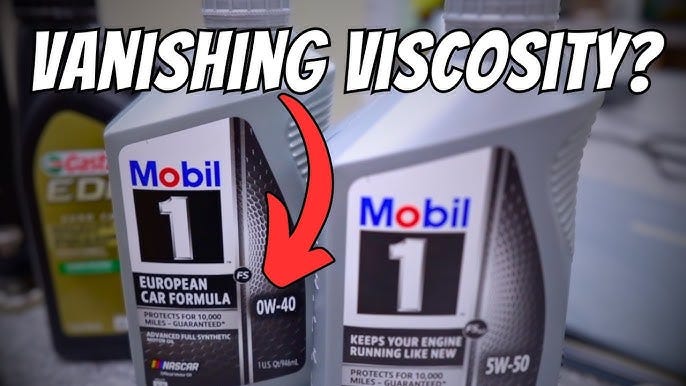
Mobil 1 0W-40:
- The factory-recommended A40 oil for many Porsches starts in grade but shears out of grade after just a few hundred miles in high-stress engines, becoming a 30-weight oil.
High-Shear Conditions:
- Oils subjected to lab testing, such as the KRL test (which simulates mechanical shearing), showed that even high-quality oils lose viscosity over time. For example, a 10W-60 oil tested lost up to 15% of its high-temperature, high-shear (HTHS) viscosity.
The takeaway? Even the best commercial oils can shear under real-world conditions, emphasizing the need for a well-chosen oil that resists breakdown. That also means that using an oil other than a factory A40 or C40 approved oil may be better for your Porsche.
Oil Recommendations for Porsche Engines
Based on these insights, here are recommended oils for Porsche engines to mitigate viscosity breakdown and maintain engine protection:
1. Street Use:
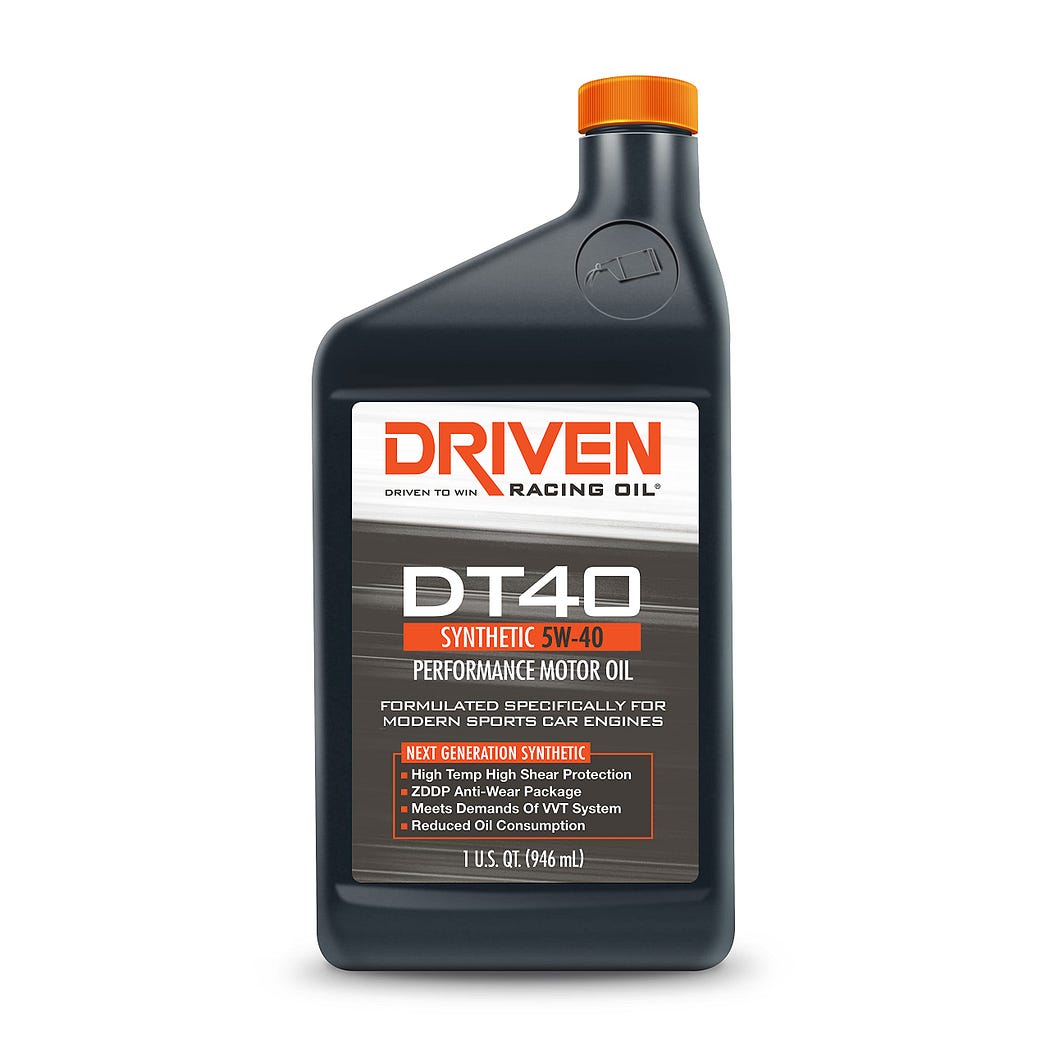
Driven DT40 (A40 Substitute):
- A premium synthetic oil with high levels of zinc (ZDDP) for wear protection and a stable viscosity under stress. Ideal for M96/M97 engines.
Driven DI40 (C40 Substitute):
- Formulated for direct-injection engines, providing excellent wear protection and deposit control.
2. Track Use:
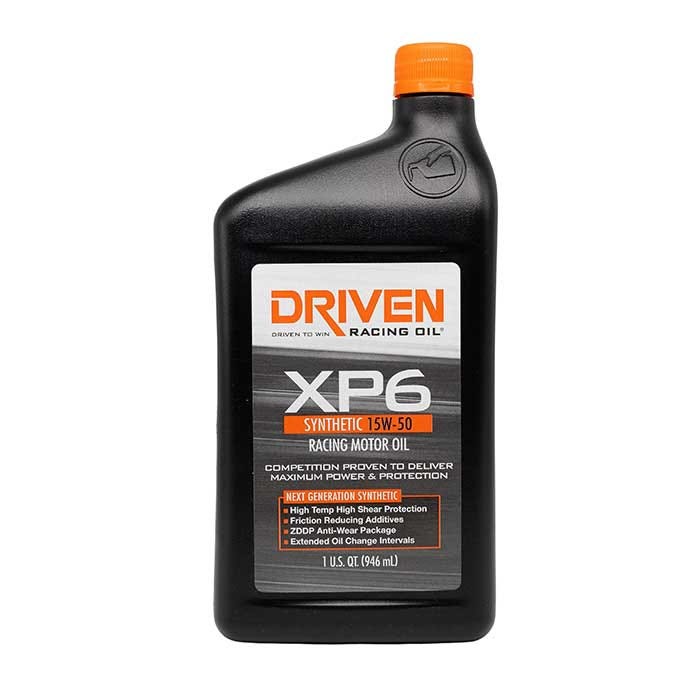
Driven XP6 15W-50:
- Offers superior thermal stability and protection for engines running sustained oil temperatures above 225°F.
- Its shear-resistant formula ensures it stays in grade during high-stress, high-RPM driving. Driven XP9 can be used for oil temperatures below 225F sustained.
3. Shear-Stable Alternatives:
HPL No VI Improver Oils:
- An interesting recent development are oils without viscosity index improvers provide unmatched shear stability, ensuring consistent viscosity and protection over time.
Why Shear Stability Matters
Testing revealed that oils with high-quality VI improvers, such as star polymers, perform better than those using traditional polymers. However, even these improved oils shear to some extent. For ultimate protection, oils without VI improvers, such as HPL’s 5W-30 No VI Improver Oil, deliver unmatched stability, especially in high-shear engines.
For example:
- A shear-stable 5W-30 can perform comparably to a sheared 0W-40 oil, making it a practical choice for high-performance applications where viscosity stability is critical.
Using the correct viscosity for your bearing clearances and operating temperature is equally important.
However, it’s important to remember the 4 R’s of oil — Right Oil, Right Place, Right Time, and the Right Amount!:
The 4 R’s of Engine Oils are principles that help ensure optimal engine performance and longevity through proper oil selection, use, and maintenance.
This includes:
Right Oil
- Use the correct oil type and viscosity specified for your engine. For Porsche owners, this often means selecting oils that meet Porsche A40 or C40 approvals or high-performance alternatives like Driven DT40 or DI40. The right oil provides adequate protection for your engine’s specific design, operating conditions, and performance requirements. This also means for track use a race oil should be used, not a street oil!
Right Time
Change your oil at appropriate intervals based on driving conditions:
- Street Use: Every 5,000 miles or 6 months.
- Track Use: After every track event.
Regular changes ensure contaminants like dirt, fuel, and moisture are removed before they degrade oil performance.
If you don’t have the right oil in the right place at the right time and in the right amount, failures will occur.
Right Quality
- Select a high-quality oil with robust additive packages for wear protection, oxidation resistance, and cleanliness. Oils with high levels of zinc (ZDDP) or molybdenum, such as Driven XP6, are excellent for high-performance engines that require additional protection against wear and heat.
Right Filter
- Always pair your oil with a high-quality filter to ensure maximum cleanliness and efficiency. Using OEM filters or premium options like those recommended by LN Engineering guarantees optimal oil flow and contaminant removal.
By following these “4 R’s,” you can maximize engine longevity, reduce wear, and maintain peak performance.
Best Practices for Porsche Owners
Monitor Oil Temperatures:
- If your oil consistently exceeds 225°F, use a high-viscosity oil like Driven XP6 15W-50 for the track.
Change Oil Regularly:
- For street use: Change every 5,000 miles or 6 months.
- For track use: Change after every event.
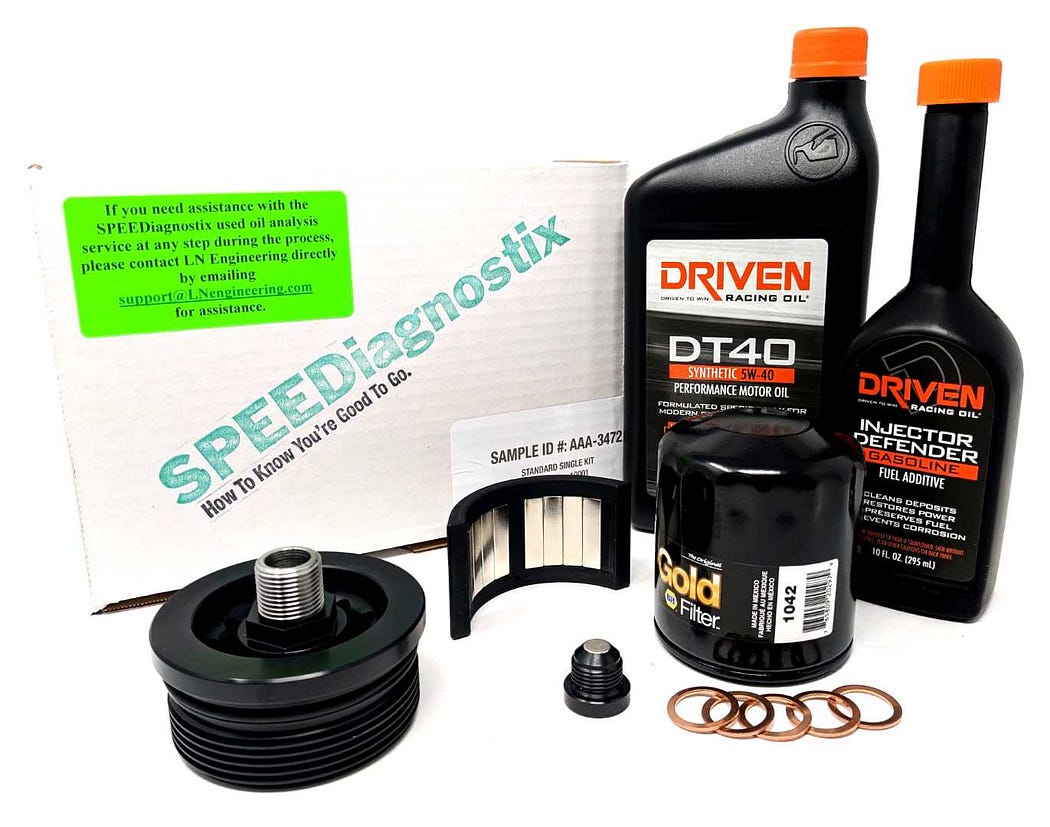
Perform Used Oil Analysis (UOA):
- Regular used oil analysis detects viscosity loss and wear metals, helping identify issues before they cause damage.
Choose Oils Based on Your Needs:
- Use Porsche-approved oils during the warranty period but consider shear-stable alternatives for better long-term protection.
Conclusion
Viscosity breakdown is an unavoidable challenge for high-performance engines, but the right oil can minimize its impact. Whether you’re using your Porsche for daily driving or pushing it to its limits on the track, choosing a shear-stable oil designed for high-stress conditions will help protect your investment and keep your engine running smoothly.