How common is a Porsche RMS failure and how do I prevent one?
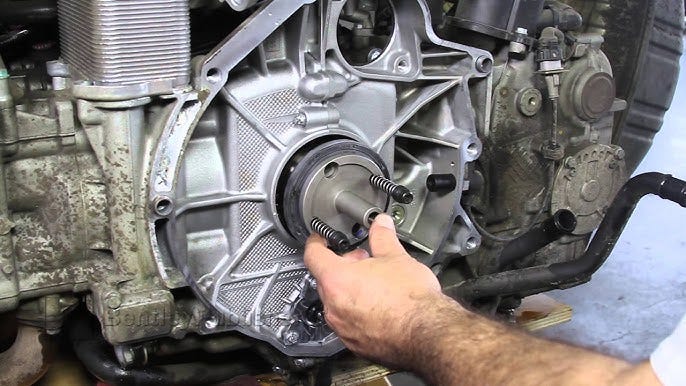
Porsche models like the Boxster, Cayman, and the 911, particularly the 996 and 997, are sometimes affected by rear main seal (RMS) issues, which can lead to oil leaks. Located at the engine’s flywheel end, the RMS seals the crankshaft, preventing oil from escaping. Initially, the leak may be minor but can worsen over time, potentially damaging the clutch assembly if left unaddressed.
The awareness of this problem within the Porsche community has led to the adoption of better sealing solutions, such as the updated Genuine Porsche PTFE RMS that offers a more reliable seal when fitted correctly. During installation, specific tools like the Porsche 9699 RMS installation tool are recommended to set the seal accurately. It’s critical to handle the seal cleanly, without any oil contamination, and to avoid any sealants on its exterior surface.
Contrary to some beliefs, the RMS issues are not caused by the heavy dual mass flywheel, and adding a bearing to the RMS is not advised, as it may introduce new complications. Some of the older Boxster and 911 996 models had manufacturing discrepancies leading to misalignment issues, which can be diagnosed with the 9699–1 tool. Only the latest Genuine Porsche PTFE RMS should be used for replacements to avoid problems associated with aftermarket products.
For those considering the purchase of a lower mileage Porsche, be cautious of potential RMS defects that might not have been evident during the warranty period. However, these leaks are usually identifiable during a pre-purchase inspection (PPI).
It’s also worth noting that leaks from the IMS flange can be mistaken for RMS leaks. LN Engineering provides a complimentary tool rental for RMS installation with the purchase of an IMS Retrofit or IMS Solution kit, which can be useful when addressing either RMS or IMS bearing issues.
Key points everyone should know Porsche rear main seal (RMS) include:
• Porsche RMS failures are common in Boxster, Cayman, and 911 models, especially the 996 and 997.
• The RMS prevents oil from leaking at the crankshaft but can start leaking over time.
• Leaks can lead to clutch assembly damage if severe.
• Newer Genuine Porsche PTFE rear main seals are less prone to leaking if installed correctly.
• A special Porsche RMS installation tool is required for proper fitting.
• Direct contact with the RMS should be avoided; gloves should be used.
• The seal must be installed dry, without oil or sealants.
• RMS should be replaced whenever the flywheel is removed, such as when servicing the IMS bearing.
• Misinformation exists about the cause of RMS leaks and the need for additional bearings.
• Specific tools can diagnose machining issues in Boxster and 996 models that lead to leaks.
• Only the latest Genuine Porsche PTFE RMS should be used, avoiding aftermarket options.
• Low mileage Porsches may have undiagnosed RMS issues.
• RMS leaks are usually spotted during pre-purchase inspections.
• IMS flange leaks can be mistaken for RMS failures.
• LN Engineering offers free Porsche tool rental for RMS installation with purchase of IMS bearing replacement kits.
In summary, we cannot emphasize enough the importance of using the correct tools and techniques for installing the updated Genuine Porsche PTFE RMS to avoid leaks. We advise against using aftermarket seals and highlight the potential for confusion with IMS flange leaks. Buyers can identify possible RMS issues during a Porsche pre-purchase inspection, underscoring the importance of vigilant maintenance and proper diagnosis to ensure the longevity and performance of the vehicle.